

Mopping up the sauce with bread: the Italian ritual that turns a simple gesture into an act of love for food.

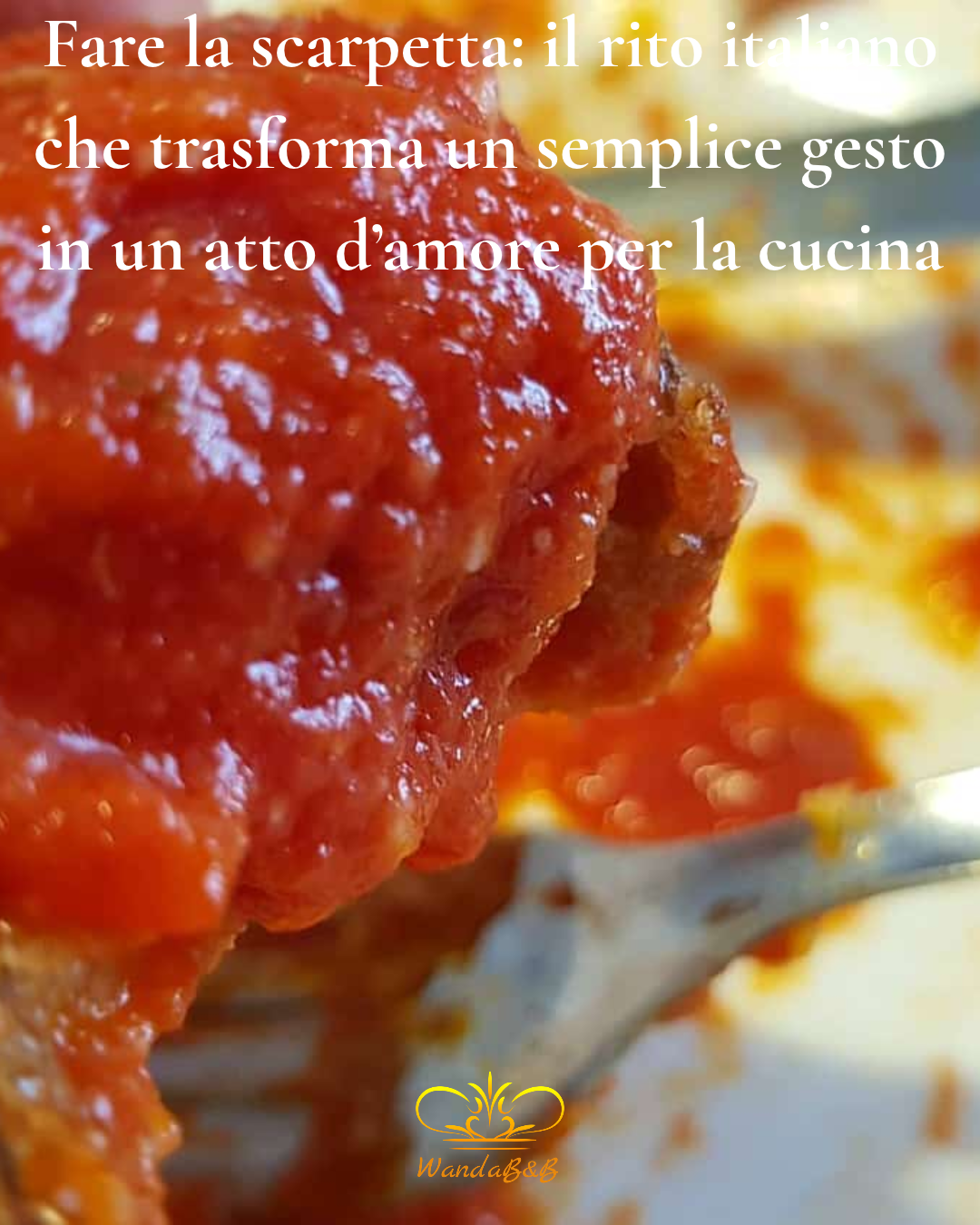
There is one gesture that, more than many others, captures Italians’ relationship with food: taking a small piece of bread and swiping it around the plate to soak up every last drop of sauce. This is *fare la scarpetta*—a simple, spontaneous habit deeply rooted in our food culture. 🍞🍅
Once considered inelegant, today it is often embraced with pride, even at formal dinners. Because when a dish is truly delicious, resisting the temptation is almost impossible!
🍞 What does *fare la scarpetta* mean?
*Fare la scarpetta* means using a small piece of bread to soak up the sauce or dressing left on the plate after a meal.
It could be Sunday ragù, the sauce from a tomato pasta dish, the fragrant olive oil from bruschetta, or the savory juices left by a main course.
It’s an instinctive gesture that requires no recipe or special tools. And yet it embodies some important values of Italian tradition: the pleasure of good food, conviviality, and respect for food.
After all, if a sauce is made with quality ingredients and cooked slowly, leaving some behind on the plate can feel almost like a sin!
🔎 Where does the expression *fare la scarpetta* come from?
The exact origin of the expression is uncertain, and several theories have been proposed over time.
One of the more evocative interpretations calls to mind a piece of bread taking a little “stroll” around the plate as it gathers up what’s left of the sauce. Other explanations focus on the shape of the bread used or the motion of wiping the plate clean.
The earliest written records of the expression are thought to date back to the 19th century, with references noted in 1871. These clues, however, are not enough to establish with certainty either where the saying originated or where the gesture itself began.
As is often the case with folk traditions, *fare la scarpetta* may have been around long before it was recorded in writing, passed down from one family to another.
🍽️ From bad manners to a symbol of Italian cuisine
For a long time, *fare la scarpetta* was considered impolite, especially at formal occasions and in settings where etiquette called for a certain decorum at the table.
But attitudes have always varied according to the period, social context, and regional customs.
Over the course of the 20th century, as traditional cuisine and popular flavors came to be increasingly valued, the gesture took on a different meaning. Home cooking, recipes passed down by grandmothers, and the pleasure of wasting nothing all helped make it an authentic expression of Italian food culture.
Today, *fare la scarpetta* is often seen as a compliment to the cook: it means the dish was so good that you want to savor every last bit of sauce.
Of course, etiquette may still call for discretion, especially on more formal occasions. But at the table with family or friends, this little ritual retains all its charm.
❤️ The value of cucina povera: waste nothing, make the most of everything
*Fare la scarpetta* also tells a story of simplicity and resourcefulness.
In the kitchens of the past, bread was precious, and leftovers weren’t casually thrown away. Soaking up the sauce left on the plate was a natural way to make the most of every ingredient.
That philosophy still matters today: reducing waste means respecting the work of the people who produce our food, the resources needed to bring it to the table, and the tradition that has taught us to use it carefully.
Italian cuisine is full of examples of this mindset: from recipes that make use of leftovers to bread soups, and dishes that transform simple ingredients into extraordinary meals.
Ultimately, *fare la scarpetta* is a small celebration of flavor and a culture of wasting nothing.
🍅 And in Naples? When the sauce calls, the bread answers!
In Naples, where food is an essential part of everyday life, bread often accompanies dishes bursting with flavor.
Think of a plate of Neapolitan ragù, slowly simmered, or a simple pasta with tomato, basil, and extra-virgin olive oil. These are flavors that bring to mind family lunches, Sundays spent together, and memories passed down through the generations.
You don’t need an elaborate recipe to make an impression: sometimes the simplest ingredients are the ones that stir the most genuine emotions.
And when there’s still a little sauce left at the bottom of your plate, bread takes center stage for one last, irresistible bite. 😋
🏡 Discover Naples through its flavors, too
Visiting Naples means exploring its landmarks, narrow streets, and sweeping views—but it also means sitting down to a meal and discovering the traditions that make this city so unique.
During your stay, you can stroll through the streets of Vomero, stop at a trattoria, and let the local cuisine win you over. After all, you can discover a place’s culture through what people eat and the little rituals that accompany every meal.
At Wanda B&B, at Via Luca Giordano 106 in the heart of Vomero, you’ll find a small, family-run place ready to welcome you and offer tips on how to experience Naples authentically.
Ciro will be happy to suggest places to visit, experiences to enjoy, and spots where you can savor Neapolitan traditions.
✨ Because traveling isn’t just about seeing a city: it’s about getting to know its customs, listening to its stories, and taking home a memory of its flavors.
And if, after a delicious meal, you find yourself reaching for bread to mop up the sauce, you’ll know you’ve taken part in one of the most beloved traditions of Italian cuisine!
Wanda B&B – Your home in Naples, in the heart of Vomero.