

Herculaneum: Two Ancient Roman Houses Reopen, Offering a Journey into Everyday Roman Life.

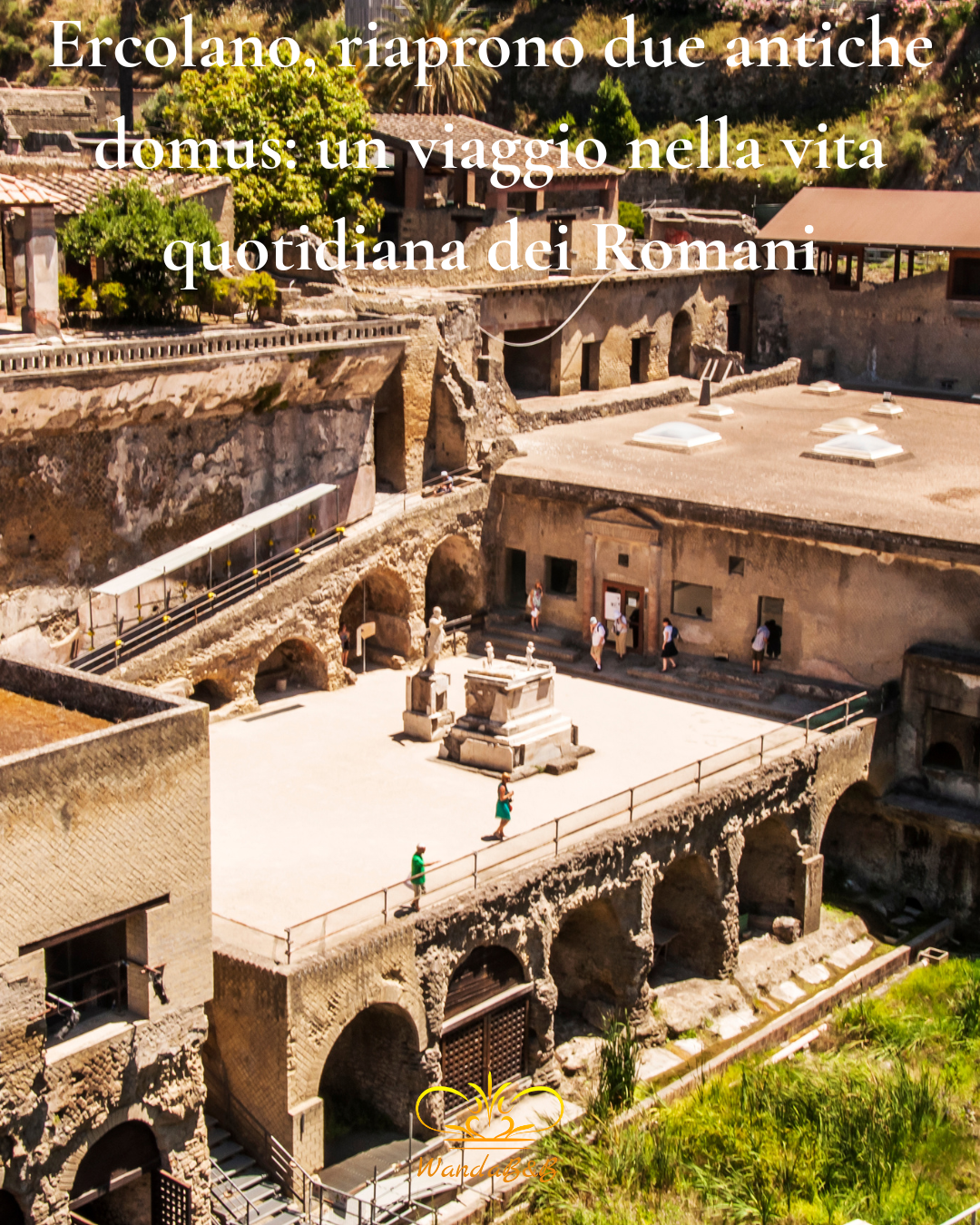
On November 5, 2026, Herculaneum will reopen two important windows onto its history: the House of the Mosaic Atrium and the House of the Timber Framework (Casa a Graticcio).
After restoration and conservation work, these two Roman homes will once again be open to the public as part of the Domus Project, a programme dedicated to protecting and enhancing the ancient houses of the city buried by the eruption of Mount Vesuvius in 79 AD.
This is more than the reopening of two historic buildings: it is an opportunity to step once again into the spaces where everyday life unfolded in a Roman city.
🏛️ **House of the Mosaic Atrium: elegance and refinement**
Covering approximately 1, 200 square metres, the House of the Mosaic Atrium is one of the most fascinating homes at the archaeological site of Herculaneum.
Its name comes from the striking mosaic floor in the atrium, one of the architectural features that define the residence.
Among its most significant spaces and features are:
- The atrium, with its marble-lined impluvium, designed to collect rainwater.
- The mosaic floors, evidence of the refined decorative style of Roman homes.
- The painted decorations, which reveal the owners’ aesthetic tastes and social standing.
- The garden with its peristyle, an enclosed space surrounded by columns, designed for moments of relaxation and socialising.
Visiting this domus offers a glimpse into how architecture, beauty and practicality came together in domestic life in ancient Herculaneum.
🧱 **House of the Timber Framework: an extraordinary example of Roman construction**
Very different in size and design is the House of the Timber Framework, which covers approximately 180 square metres.
Its name comes from a distinctive building technique used in parts of the structure, known as *opus craticium*.
This construction method used a timber frame with infill materials, creating walls that were lighter than traditional stone masonry.
One of its most remarkable features is the original balcony, a precious example of Roman residential architecture.
The house is also particularly significant because it combines spaces for private life with areas connected to commercial activities.
This detail helps us better understand how homes and businesses were organised in the ancient city.
🔎 **The Domus Project: protecting six historic homes**
The reopening of the two houses is part of the Domus Project, a programme covering six homes at the archaeological site.
Supported by €5 million in funding, the project aims to conserve and enhance this extraordinary heritage through restoration and maintenance work.
An important role is played by the partnership with the Packard Humanities Institute, which has been involved in conserving Herculaneum’s archaeological heritage for many years.
The goal is not simply to make these spaces accessible to visitors again, but to ensure that these historic sites can be preserved and passed on to future generations.
🌋 **Herculaneum: a Roman city preserved through time**
Unlike Pompeii, Herculaneum was mainly struck by pyroclastic flows, which helped preserve numerous buildings, wooden structures and organic objects.
This exceptional state of preservation makes the archaeological site one of the world’s most important places for understanding everyday life in ancient Rome.
Walking through its streets, visitors can see houses, shops, decorations, balconies and domestic spaces that offer a remarkably vivid picture of society two thousand years ago.
The reopening of the House of the Mosaic Atrium and the House of the Timber Framework therefore offers two more opportunities to discover this heritage.
❤️ Another wonder to discover during your stay in Naples
Naples and Campania are home to an extraordinary historical and archaeological heritage.
From the streets of Greco-Roman Neapolis to the domus of Herculaneum, from the monuments in the historic centre to the excavations at Pompeii, every place tells a different chapter in a story spanning millennia.
For guests staying at Wanda B&B, in the heart of Vomero, Herculaneum can be a wonderful stop on an itinerary exploring the area.
Ciro will be happy to help you find out about visiting options and make the most of your stay.
✨ Come to Naples and be amazed by a land where history isn’t just in books—it’s still there to see, just a few steps away.
Wanda B&B – Your home in Naples, in the heart of Vomero.